The Girl With the Empty Violin Case
The woman’s voice came from the academy steps.
“Mia!”
It was not a call of relief.
It was a warning.
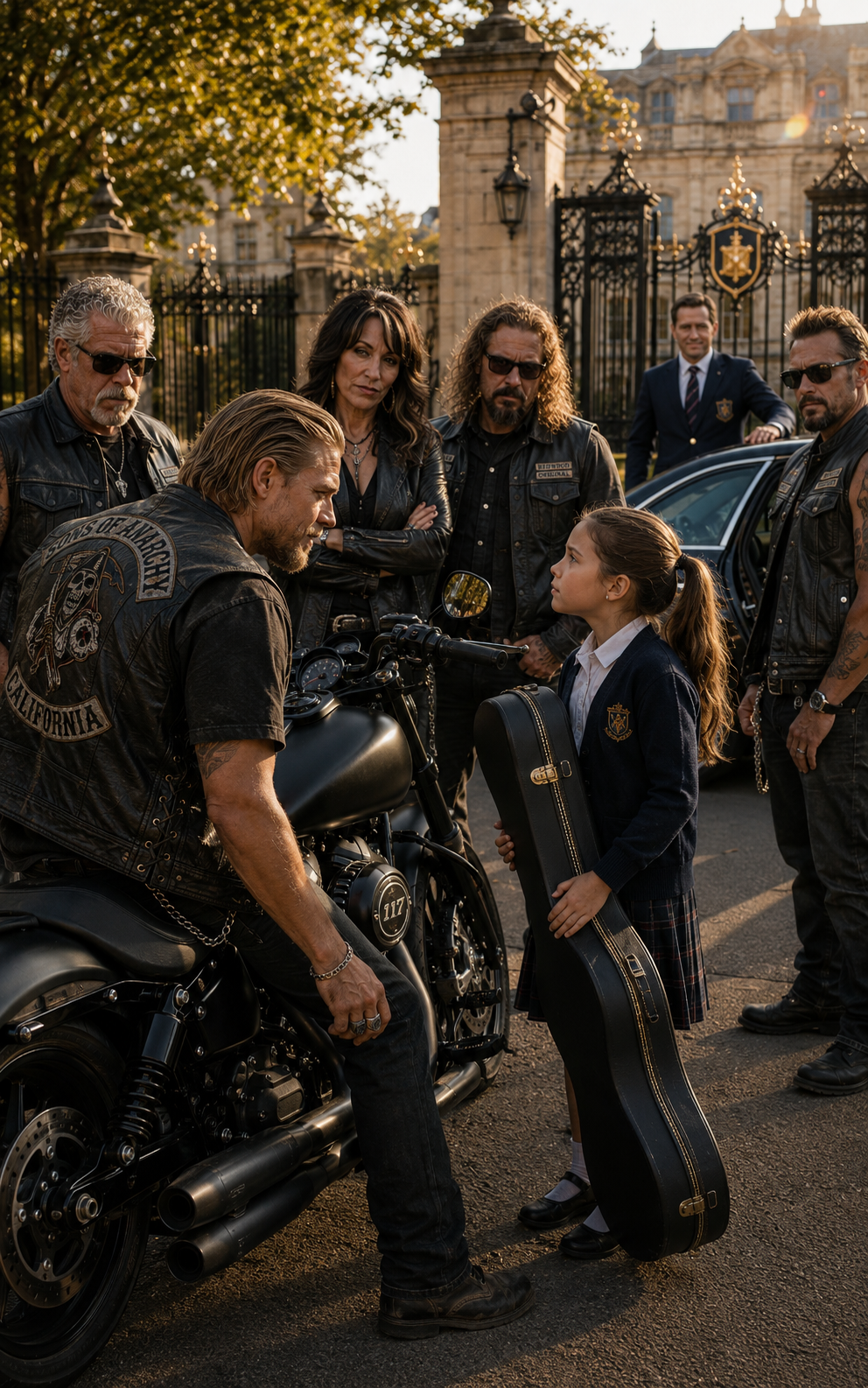
Rory turned without moving away from the child.
A woman in a charcoal dress stood beneath the academy’s stone archway. She looked to be in her early forties, with dark hair pinned loosely at the back of her neck and an identification card hanging from a blue cord.
One hand gripped the iron door.
The other held a sealed envelope.
Mr. Kessler’s face tightened.
“Dr. Park,” he said. “Go back inside.”
She ignored him.
“Mia, do not get into that car.”
The driver of the dark sedan looked toward Kessler.
For half a second, no one moved.
Then the sedan pulled away from the curb.
Its rear door was still open.
The door swung inward as the car accelerated, closing with a heavy thud before the vehicle disappeared into traffic.
Rory watched it go.
He memorized the license plate.
Beside him, Mia released a breath she had been holding.
Kessler turned toward Dr. Park.
“You are creating an unnecessary scene.”
“You created it,” she replied. “You removed a student from afternoon rehearsal without notifying her assigned counselor.”
“Her guardian authorized the transfer.”
“Then why did you tell the front office that her aunt was waiting inside the car?”
Kessler glanced at the parents gathering near the curb.
Several phones were pointed toward him now.
His voice became softer.
“This is not the place to discuss confidential information.”
Rory looked down at Mia.
“Do you know her?”
Mia nodded.
“She is the only person here who asks before closing the door.”
Dr. Park’s expression changed when she heard that.
Not surprise.
Pain.
She walked down the academy steps and stopped several feet from Rory, careful not to approach Mia too quickly.
“My name is Hannah Park,” she said. “I am the student welfare counselor.”
“Rory Vale.”
Her eyes moved to the faded patch on his riding jacket.
Then to the old photograph lying inside the violin case.
“You’re Elena’s brother.”
Rory felt the words land harder than they should have.
“You knew Elena?”
“Only through Mia’s records.”
Kessler stepped between them.
“This conversation is over. Mia is a student under the legal care of her aunt. Mr. Vale has no documented relationship with the child.”
Rory looked at Mia.
“Is Vivian your aunt?”
She nodded.
“Your mother’s sister?”
“No. My father’s.”
That explained why Rory had never heard the name.
Elena had married after leaving home. She had changed cities, changed phone numbers, and eventually stopped answering the few messages Rory managed to send.
At least that was what he had believed.
Now he wondered how many of those messages had ever reached her.
Kessler extended his hand toward the folder.
“Those documents belong to the academy.”
Mia immediately pulled the papers against her chest.
Rory stepped in front of her.
“If they belong to the academy, you can explain them to the police.”
Kessler stared at him.
“No crime has occurred.”
“Good,” Rory said. “Then nobody should mind waiting.”
He took out his phone.
Kessler’s polite expression disappeared.
“You are making a serious mistake.”
“Maybe.”
Rory dialed the emergency number.
“But it will be my mistake.”
Five Minutes That Changed Everything
The police arrived seven minutes later.
By then, the curb outside Westbridge Music Academy had become crowded with parents, students, teachers, and passing pedestrians.
Kessler had stopped speaking.
Dr. Park remained near Mia but did not attempt to touch her. Rory noticed that the counselor kept her hands visible and her voice low whenever she spoke to the child.
Two officers separated everyone.
One spoke with Kessler near the academy gate.
The other crouched several feet in front of Mia.
“My name is Officer Ramirez,” she said. “You are not in trouble. Can you tell me whether you feel safe standing here?”
Mia looked at Rory before answering.
“Yes.”
“Do you know this man?”
“His name is Rory Vale.”
“Is he a relative?”
Mia looked toward the old photograph inside the open case.
“I think he is my uncle.”
The word struck Rory differently this time.
Not because it proved anything.
Because Mia had said it as if she were testing whether she was allowed to hope.
Officer Ramirez turned toward him.
“Do you have identification?”
Rory handed over his license.
“I haven’t seen her before today.”
Mia’s shoulders tensed.
He continued quickly.
“But her mother was my younger sister.”
The officer looked at the photograph.
“You can establish that?”
“Yes.”
“Do you have legal guardianship?”
“No.”
Kessler heard the answer from across the pavement.
“There,” he said. “He has admitted he has no authority to interfere.”
Officer Ramirez did not look at him.
“Sir, please continue speaking with my partner.”
Kessler lowered his voice, but the anger underneath it was clear.
“This child is scheduled for immediate transfer to a residential educational program.”
“Where?” Officer Ramirez asked.
“The Marlow Center.”
Dr. Park stepped closer.
“The Marlow Center closed its residential wing four months ago.”
Everyone looked at her.
Kessler’s eyes narrowed.
“That information has not been publicly announced.”
“I called them.”
“You had no authorization.”
“I became concerned when you removed Mia from my appointment and refused to provide a destination address.”
Officer Ramirez held out her hand toward the documents.
“Mia, may I look at the folder?”
The child hesitated.
Rory lowered himself beside her.
“You can ask her to give it back when she’s finished.”
Mia studied his face.
“You won’t leave?”
“No.”
“Even if they tell you to?”
“I’ll stay where they can see me.”
That answer seemed to matter.
Mia handed the folder to the officer.
The top page appeared to be a student transfer authorization. Several signatures had been copied onto it, including that of Vivian Mercer, Mia’s legal guardian.
But two details stood out.
The date beside Vivian’s signature had been corrected by hand.
And the destination address did not belong to the Marlow Center.
It belonged to a private office building twenty miles outside the city.
Officer Ramirez turned to Kessler.
“Why does this document list a commercial property as the transfer location?”
“It is an administrative office.”
“For a residential program?”
“The students are processed there before placement.”
Dr. Park shook her head.
“I have never heard of that procedure.”
Kessler looked at Mia.
“This is exactly why children should not be allowed to remove confidential documents.”
The child took one step behind Rory.
He felt the movement more than he saw it.
Officer Ramirez opened another page.
This one was not a school transfer form.
It was a trust-management authorization.
The language was dense, but one sentence had been marked with a yellow highlighter:
Upon enrollment in an approved residential arts program, temporary administrative control of the beneficiary’s educational trust may be transferred to the designated institutional foundation.
Officer Ramirez read it twice.
Then she looked at Kessler.
“Does Mia have an educational trust?”
“That is private financial information.”
“Do you know the answer?”
“I am the academy’s director of student advancement. Financial arrangements are handled by a separate office.”
Dr. Park held up the sealed envelope.
“I believe this came from that office.”
Kessler turned toward her.
“Where did you get that?”
“It was placed beneath my office door this afternoon.”
“By whom?”
“There was no name.”
Officer Ramirez accepted the envelope.
Inside was a copied bank statement, a handwritten note, and a list of five students.
Mia’s name appeared at the top.
Beside it was a figure:
$4,860,000
Rory stared at the number.
Mia did not.
She seemed more interested in Kessler’s face.
The handwritten note contained only one sentence:
They are moving the children whose trusts can cover the academy’s losses.
Kessler took a step backward.
“This is fabricated.”
Officer Ramirez looked at her partner.
The second officer moved closer to him.
“We’re going to need you to remain here while we verify some information.”
Kessler’s voice sharpened.
“You cannot detain me because of anonymous allegations.”
“No one said you were being detained.”
“Then I am leaving.”
He turned toward the academy doors.
Mia spoke before anyone could stop him.
“My aunt told you the money would be released Friday.”
Kessler froze.
The curb became silent again.
Officer Ramirez looked at Mia.
“When did you hear that?”
“Yesterday.”
“Where?”
“In his office.”
“What were you doing there?”
“I was waiting outside because he said he needed to talk to my aunt alone.”
Mia tightened both hands around the handle of the empty violin case.
“The door wasn’t closed all the way.”
What Mia Heard
The officers moved the conversation inside the academy lobby, away from the traffic and the growing crowd.
Rory was told he could remain nearby as long as he did not answer questions for Mia or influence what she said.
He agreed.
They sat in a small reception room decorated with framed photographs of smiling students holding instruments.
Mia placed the violin case across her knees.
It looked even larger indoors.
Officer Ramirez sat opposite her.
“Tell me exactly what you remember hearing.”
Mia kept her eyes on the metal latches.
“My aunt said the bank kept asking questions.”
“What kind of questions?”
“About my mother.”
Rory’s chest tightened.
Mia continued.
“Mr. Kessler said it didn’t matter because the academy would become the educational administrator after I transferred.”
“Did he use those exact words?”
“I think so.”
“What did your aunt say?”
“She asked when she would get her part.”
Kessler, standing near the doorway with the other officer, shook his head.
“This is a child repeating fragments of an adult conversation.”
Mia’s fingers stopped moving.
Rory saw her retreat inward.
Not physically.
Her face simply became blank.
It was the expression of someone who had learned that emotion could be used as evidence against her.
Officer Ramirez turned toward Kessler.
“Please do not interrupt.”
Mia continued.
“Mr. Kessler said they needed my signature.”
“Your signature on what?”
“I don’t know.”
“He may have meant an attendance form,” Kessler said.
The second officer guided him farther from the door.
Mia looked at Officer Ramirez.
“He said if I refused, my aunt could sign because I was too young to understand.”
“Did he say where you were going today?”
“He said I was being moved somewhere quiet.”
“What did your aunt tell you?”
“She said I was going to a better school.”
“Did she tell you when?”
“This morning.”
“Did she help you pack?”
“No.”
“Did she say goodbye?”
Mia’s voice became almost inaudible.
“She told me not to make this harder for everyone.”
Rory looked away.
He knew sentences like that.
They sounded reasonable to adults.
To a child, they meant that fear was an inconvenience and silence was a duty.
Officer Ramirez pointed gently toward the violin case.
“Why did you bring the documents?”
Mia ran her thumb along a scratch near the handle.
“Mr. Kessler keeps a key in the second drawer of his desk.”
Kessler stepped forward.
“You entered my office?”
She ignored him.
“I saw him use it before. It opens the file cabinet.”
“When did you take the papers?”
“During lunch.”
“Why put them in a violin case?”
“Students aren’t allowed to take backpacks into rehearsal.”
“Do you play the violin?”
“No.”
“Whose case is it?”
Mia looked at Rory.
“My mother’s.”
That answer changed the room.
Rory stared at the worn black case.
He remembered Elena carrying it through their childhood home, bumping it against doorframes and leaving dark marks their father complained about.
She had played until she was sixteen.
Then she quit.
Rory had always believed it was because their parents pushed too hard.
Now he wondered whether the violin case had remained important for another reason.
Mia opened a narrow compartment beneath the lining.
From it, she removed the old photograph and a folded piece of paper tied with blue ribbon.
“I found these under the fabric after my mother died.”
Rory could barely speak.
“How long ago?”
“Three years.”
Elena had been gone for three years.
He had not known.
No one had called him.
No funeral notice had reached him.
For a moment, the room seemed to shift.
Rory placed both palms flat on his knees.
“What happened to her?”
Mia looked down.
“She got sick.”
Rory waited for more.
None came.
He understood that the child had probably been asked the same question too many times by adults who wanted details she did not have.
“May I see the paper?” he asked.
Mia held it tighter.
“Not yet.”
He nodded.
“All right.”
Kessler gave a short, humorless laugh.
“You see? She has been collecting objects and inventing connections. Mr. Vale may share a surname, but that does not make him a suitable guardian.”
Rory turned toward him.
“I haven’t asked to take her anywhere.”
“You inserted yourself into a private transfer.”
“She asked for help.”
“She asked you to lie and pretend to be her uncle.”
Mia looked at Kessler.
“No,” she said. “I asked him to say it until you left.”
The distinction silenced him.
She had not known whether Rory truly was her uncle.
She had only known that his patch matched the one her mother had told her to find.
The Letter Beneath the Blue Ribbon
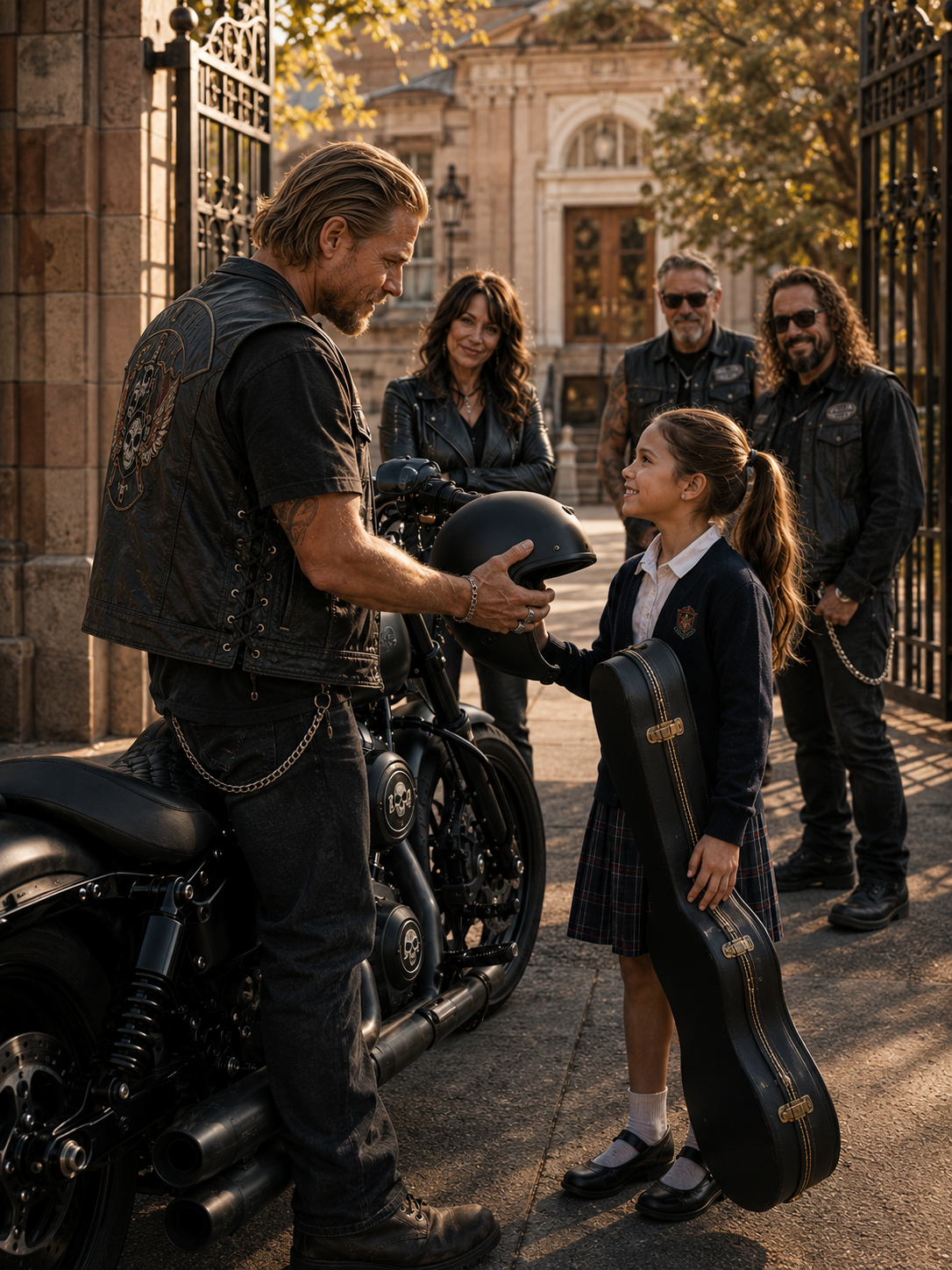
A child welfare investigator arrived at the academy shortly before sunset.
Her name was Camille Brooks.
She spoke first with Mia, then Rory, Dr. Park, the officers, and several academy employees.
Kessler was escorted to a separate room after investigators confirmed that the commercial address on the transfer document was leased by a consulting company connected to the Westbridge Arts Foundation.
The driver of the sedan had not returned.
No one could immediately locate Vivian Mercer.
Camille explained that Mia could not leave with Rory simply because he might be a relative.
His identity had to be verified.
A safe temporary arrangement would need to be approved.
Rory accepted every condition.
He gave them his address.
His work records.
The phone number of his employer.
The names of people who could confirm where he had lived for the previous twelve years.
He did not ask to be trusted.
He gave them reasons to check.
Mia watched him throughout the process.
When Camille asked whether she wanted Rory to remain at the academy while arrangements were made, Mia nodded.
Only then did she untie the blue ribbon.
The folded paper was old and soft at the edges.
She opened it carefully.
The first line was written in Elena’s handwriting.
Rory recognized it immediately.
My dearest Mia,
He looked away before emotion could overtake him.
Mia began reading aloud.
“My dearest Mia, if you are opening this, then I was not able to explain everything myself.”
Her voice remained steady.
“I hope that never happens. I hope I am sitting beside you, embarrassed that I wrote such a serious letter.”
Rory closed his eyes.
That sounded like Elena.
Even afraid, she would have made room for humor.
Mia continued.
“There may come a time when adults tell you that being young means you do not understand what is happening around you. Sometimes adults say this because they want to protect children. Sometimes they say it because children have noticed something important.”
Camille sat very still.
“If anyone tries to move you without explaining where you are going, find the old photograph. Look for the winged wheel on the jacket.”
Mia glanced toward Rory’s patch.
“The man wearing it is my brother, Rory Vale. I have not spoken to him in years, and that is partly my fault. But once, when I was young and frightened, he was the person who came when I called.”
Rory covered his mouth with one hand.
Mia’s voice trembled for the first time.
“If he still wears that patch, tell him I am sorry. Tell him I should have answered his letters.”
Rory looked sharply at the page.
“Letters?”
Mia continued.
“I did not learn until recently that several letters he sent were kept from me. By then, I was ashamed that so much time had passed.”
Rory thought of every envelope he had mailed.
Every birthday card returned without explanation.
Every message that seemed to vanish.
He had told himself Elena had chosen a life without him.
The truth was more complicated.
She had been separated from him, then embarrassed by the distance, then trapped by time.
Mia read the final paragraph.
“Rory may be difficult, stubborn, and too proud to ask for help. But he will never ask you to become smaller so that someone else can feel powerful.”
A tiny sound escaped Rory.
It might have been a laugh.
It might have been grief.
“Do not trust him simply because I loved him,” Mia finished. “Watch what he does after you ask for help. That will tell you who he is.”
The letter ended with Elena’s name.
For several seconds, no one spoke.
Mia folded the paper again.
“Did you know she was trying to find you?”
“No.”
“Did you stop writing?”
“Eventually.”
“Why?”
“Because I thought she wanted me to.”
Mia considered that.
“My mother said people sometimes stop knocking because they think the door is locked.”
Rory nodded.
“She was right.”
“Sometimes it’s only stuck.”
He looked at her.
There was Elena in that sentence.
Not in Mia’s face.
In the quiet way she placed hope inside something practical.
The Guardian Who Disappeared
By evening, investigators had confirmed Rory’s relationship to Mia.
Elena Vale had been his younger sister.
Mia’s father, Daniel Mercer, had died in a construction accident when Mia was four. Elena had become ill several years later and placed temporary guardianship with Daniel’s sister, Vivian.
The arrangement was supposed to last six months.
It had never been formally reviewed.
Vivian had enrolled Mia at Westbridge Music Academy shortly after Elena’s death.
The tuition was paid through the educational trust Elena and Daniel created for their daughter.
The trust was substantial because of a life insurance policy, a legal settlement connected to Daniel’s accident, and an inheritance Elena received from their grandmother.
But the money could only be used for Mia’s education, healthcare, and future housing.
Vivian could not access it for personal expenses.
Unless Mia entered an approved residential educational program.
Under one of the trust’s lesser-known provisions, a licensed institution could temporarily manage funds necessary for the child’s full-time care.
Kessler appeared to have found a way to turn that provision into a financial opportunity.
The Westbridge Arts Foundation was deeply in debt.
Enrollment had fallen.
Donations had slowed.
Construction loans for the academy’s new concert hall were months overdue.
The five students listed in the anonymous envelope all had large educational trusts and limited family support.
Three had already been transferred.
One was currently living at a facility investigators could not immediately verify.
The fifth was Mia.
Rory stood near the academy windows as darkness settled over the street.
“This wasn’t only about her,” he said.
Camille shook her head.
“It rarely is.”
“Where is Vivian?”
“We’re trying to locate her.”
“Did she sign the transfer?”
“The signature is inconsistent with other records.”
“She was involved.”
“Possibly.”
Rory did not like the careful word.
Camille noticed.
“Possibility matters,” she said. “It keeps us from accusing the wrong person before we have evidence.”
“She told Mia not to make it harder.”
“That may become evidence. It is not yet the whole story.”
Rory looked through the glass at Mia.
She was sitting at a small table with Dr. Park, eating crackers from a paper cup.
“Where does she go tonight?”
Camille checked her notes.
“If your background check clears, the agency can consider an emergency kinship placement.”
“With me?”
“Yes.”
“Tonight?”
“Possibly.”
Rory looked down at his clothes.
Worn riding jacket.
Black work shirt.
Boots marked with engine grease.
His apartment had one bedroom, a sagging couch, three motorcycles in various states of repair, and a refrigerator that contained coffee, mustard, and half a pie.
“I’m not prepared.”
Camille’s expression softened.
“Prepared people are often less prepared than they think. Unprepared people sometimes understand how seriously they need to take it.”
“I work early.”
“Then you will need a plan.”
“I don’t know what children eat.”
“Food, generally.”
Rory looked at her.
She almost smiled.
“You do not have to decide her entire future tonight,” Camille said. “You only have to decide whether you can provide one safe night while the court reviews the case.”
Rory looked at Mia again.
One safe night.
That sounded small.
But he suspected Mia’s life had been shaped by adults who kept postponing small acts of protection because they were waiting to feel ready.
“I can do one night.”
The House With Three Locks
Rory’s background check cleared shortly after nine.
Camille inspected his apartment personally.
She found a clean but nearly empty spare room that Rory used for storage, medication locked inside a bathroom cabinet, working smoke detectors, and three separate locks on the front door.
“Why three?” she asked.
“I used to live in a worse neighborhood.”
Mia stood in the spare room.
A metal shelf held motorcycle parts, old magazines, and two boxes of winter clothing.
Rory began moving everything into the hallway.
“You don’t have to do that,” Mia said.
“Yes, I do.”
“Where will you put it?”
“I’ll figure it out.”
“You said you only agreed to one night.”
“I did.”
“Then why move everything?”
Rory carried the second box into the living room.
“Because one night still needs a room.”
Mia placed the empty violin case beside the wall.
She did not smile.
But some of the tension left her shoulders.
Camille gave Rory a list of numbers, rules, and appointment times.
Mia would meet with a child advocate the following morning.
Rory could not contact Vivian directly.
He could not question Mia repeatedly about the case.
He could not remove her from the county.
Any contact from academy staff had to be reported.
Rory listened without interrupting.
After Camille left, the apartment became painfully quiet.
Mia stood near the kitchen counter.
Rory opened the refrigerator.
Coffee.
Mustard.
Pie.
He closed it.
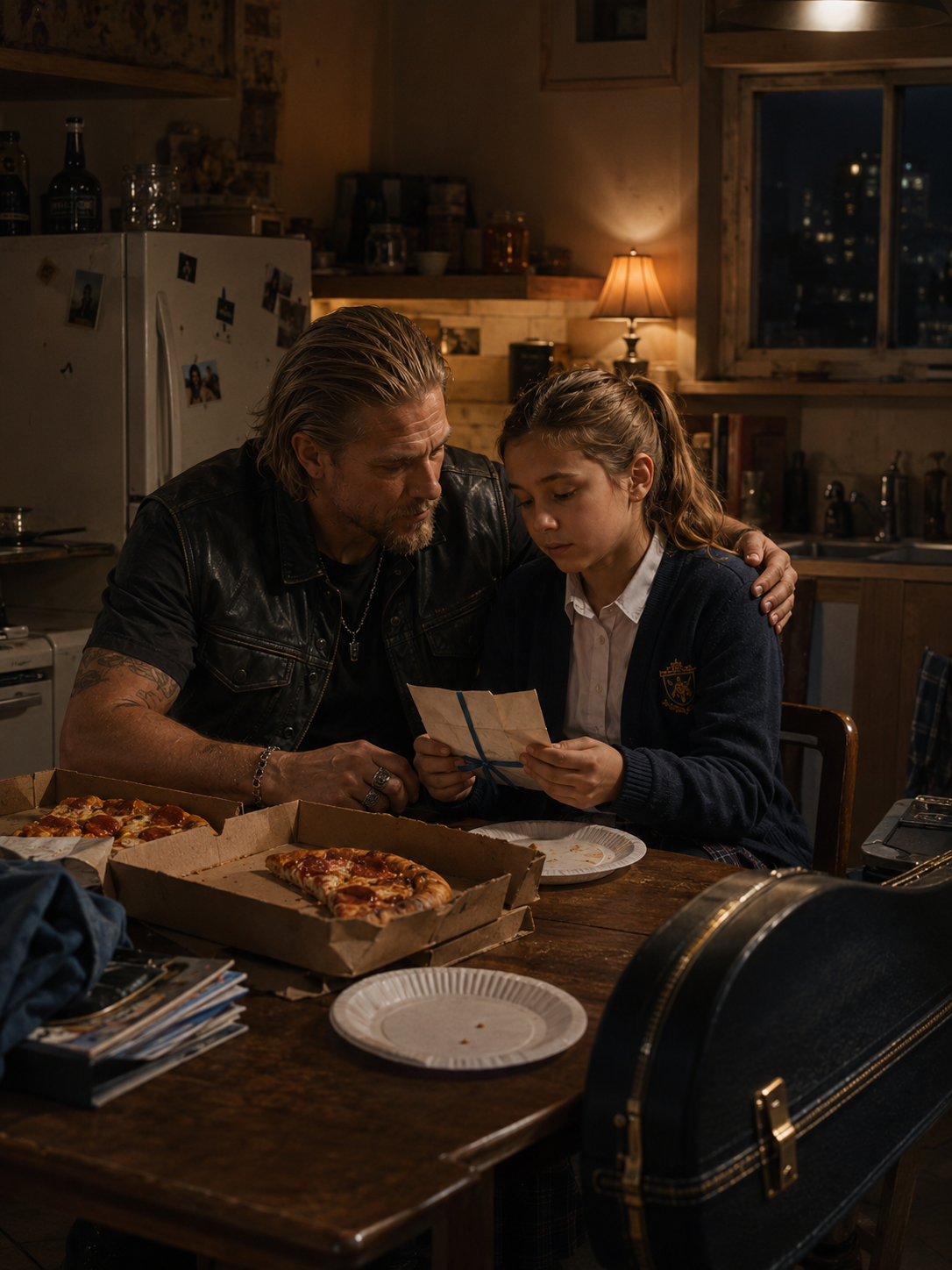
“Do you like pizza?”
“Yes.”
“What kind?”
“Normal.”
“That is not a kind.”
“Cheese.”
He ordered two pizzas because he did not know how much a nine-year-old ate.
Mia watched him place the order.
“You could have ordered one.”
“I know that now.”
“You can cancel the second one.”
“It’s too late.”
“You ordered it thirty seconds ago.”
“They’ve committed.”
She stared at him.
Then, unexpectedly, she laughed.
It was a small sound.
Almost suspicious.
As though laughter might be taken away if she used too much of it.
Rory leaned against the counter.
“Your mother used to order extra food whenever she was nervous.”
“Why?”
“She said leftovers were proof the future existed.”
Mia looked toward the dark window.
“That sounds like her.”
They ate at the kitchen table.
Mia removed the school cardigan and folded it neatly over the back of her chair.
Beneath it, she wore a white shirt buttoned to the throat.
Rory noticed a red mark around her wrist.
He did not stare.
“Did someone hurt you today?”
Mia looked down.
“Mr. Kessler grabbed me when I tried to leave his office.”
“Did you tell the officer?”
“Yes.”
“Good.”
“You’re angry.”
“Yes.”
“Are you going to go back there?”
“No.”
“Why not?”
“Because being angry doesn’t give me permission to make your situation harder.”
She studied him with the same terrifying focus she had used outside the academy.
“My aunt says angry men always say they are protecting someone.”
“Sometimes they are lying.”
“How can you tell?”
Rory thought about Elena’s letter.
“Watch what they do after the anger arrives.”
Mia nodded slowly.
He realized they were both being tested.
She had been told to watch what he did after she asked for help.
He had to watch what he did after learning how badly she had needed it.
The Call at 2:13 A.M.
Mia went to bed shortly after midnight.
Rory gave her the spare room and slept on the couch.
At 2:13 a.m., his phone rang.
The number was blocked.
He answered quietly.
“Rory Vale?”
A woman’s voice.
He sat up.
“Who is this?”
“Is Mia with you?”
He looked toward the hallway.
“Vivian?”
There was a pause.
“You have no right to take her.”
“I didn’t take her.”
“You manipulated the situation.”
“She asked a stranger to pretend to be family because she was afraid of the people responsible for her.”
“You do not understand what she is like.”
Rory stood and walked toward the kitchen.
“What is she like?”
“Difficult. Secretive. She steals. She listens at doors. She invents threats whenever she doesn’t get what she wants.”
“She copied papers from a cabinet.”
“Exactly.”
“The papers appear to show someone trying to gain control of her trust.”
Vivian’s breathing changed.
“Kessler said the transfer would protect the money.”
“From whom?”
“From being wasted.”
“On Mia?”
“That is not what I meant.”
“It sounded like it.”
Vivian lowered her voice.
“You think you can appear after twelve years and understand this family?”
“I appeared because she asked.”
“She does not know you.”
“No.”
“Elena did not want you involved.”
“That’s not what her letter says.”
Silence.
Long enough to confirm that Vivian knew about it.
“You knew Elena left the letter,” Rory said.
“She was confused near the end.”
“Everyone seems to say that whenever a dead woman leaves instructions they don’t like.”
“You are not capable of raising a child.”
“I haven’t claimed I am.”
“Then return her.”
“To you?”
“Yes.”
“Where are you?”
Another pause.
“I am speaking with an attorney.”
“Give me the attorney’s name.”
The line went dead.
Rory stared at the phone.
A floorboard creaked behind him.
Mia stood in the hallway, holding the blue ribbon.
“How much did you hear?” he asked.
“Enough.”
“You should be sleeping.”
“I tried.”
He pulled out a chair.
She sat.
“Did she say she wants me back?”
“Yes.”
“Did she say she was sorry?”
“No.”
Mia looked at the tabletop.
Rory wished she would cry.
Crying was a language he understood better than stillness.
“She used money from my trust,” Mia said.
“You know that?”
“I heard her talking to someone from the bank.”
“How much?”
“She said she would replace it after selling the house.”
“Did she sell it?”
“No.”
“Why not?”
“She said no one would pay what it was worth.”
Rory looked toward the clock.
“Did you tell the investigators?”
“I told Dr. Park.”
“We’ll tell Camille in the morning.”
Mia twisted the blue ribbon around her fingers.
“My aunt said she took care of me when no one else wanted me.”
Rory remained silent for a moment.
“People sometimes do one good thing and use it as permission to do ten bad things.”
“Did she do a good thing?”
“She gave you a home after your mother died.”
Mia nodded.
“That matters.”
“So does everything after it.”
“Yes.”
“Can both be true?”
“Yes.”
The child’s eyes filled.
“Then I don’t know what I’m supposed to feel.”
“You’re not supposed to feel one thing.”
That was when she cried.
Quietly at first.
Then with the exhausted grief of someone who had spent too long being reasonable.
Rory did not reach for her immediately.
He remembered how she had kept distance from him at the curb.
“Would it help if I sat closer?” he asked.
She nodded.
He moved to the chair beside her.
After a moment, Mia leaned against his arm.
Rory stayed still.
He did not tell her everything would be fine.
He did not know that.
He told her something smaller.
“You are safe in this room tonight.”
She closed her eyes.
For that night, it was enough.
The Truth About Vivian
Vivian turned herself in the following afternoon.
Her attorney accompanied her.
She denied knowing that the Marlow Center had closed its residential wing. She claimed Kessler presented the transfer as a legitimate educational opportunity.
Bank records told a more complicated story.
Over eighteen months, Vivian had used nearly $190,000 from accounts connected to Mia’s household and educational expenses.
Some payments were legitimate.
Medical care.
School fees.
Housing.
Others were not.
Luxury travel.
Personal debt.
Renovations on a property Mia did not own.
Kessler had promised to help conceal the withdrawals if Vivian approved the transfer.
Once the academy foundation became temporary administrator, altered records could classify the missing funds as prepaid residential expenses.
Vivian would avoid an audit.
The academy would gain access to millions.
Mia would be placed in a program that existed largely on paper.
Kessler was suspended from Westbridge while the investigation continued.
The academy board announced an independent financial review.
Dr. Park provided emails showing that she had raised concerns about several student transfers months earlier.
Her complaints had been dismissed.
The anonymous envelope came from a junior accountant inside the academy foundation.
After seeing Mia’s name added to the transfer list, he decided he could no longer remain silent.
Investigators located the three previously transferred students.
Two were staying in poorly supervised rental homes managed by foundation contractors.
The third had already returned to relatives after repeatedly asking to leave.
All three were brought into safer arrangements.
The case was no longer only about Mia.
That mattered to her.
When Camille explained what happened, Mia listened without interrupting.
“Will the other children go home?” she asked.
“Some will. Others may go to relatives or approved caregivers.”
“Will they know I found the papers?”
“Only if you decide you want them to know.”
Mia thought about it.
“I don’t want to be in the news.”
“You do not have to be.”
“I don’t want people at school calling me brave.”
“Why?”
“Because then they will keep asking me to tell the story.”
Camille nodded.
“That is a reasonable boundary.”
Rory watched from the other side of the room.
Adults often praised children for surviving things that adults should have prevented.
Mia did not want praise.
She wanted the right to move forward without performing her pain for strangers.
The Courtroom Question
Three weeks later, Rory stood in family court wearing the only suit he owned.
It had belonged to a friend and pulled slightly across his shoulders.
Mia sat beside her appointed advocate.
Vivian sat at another table with her attorney.
She looked smaller than Rory expected.
Not harmless.
Just human.
That made everything more difficult.
The judge reviewed the temporary guardianship arrangement, Rory’s home inspection, employment history, criminal background check, and the findings from the academy investigation.
Rory had one old misdemeanor from his twenties after a bar fight.
He had disclosed it.
He had also completed anger-management counseling and had no further record.
The judge looked at him over her glasses.
“Mr. Vale, you had no relationship with this child before the day outside the academy.”
“That’s correct.”
“You have never raised a child.”
“No.”
“You work at a motorcycle repair shop.”
“I manage it.”
“Your hours begin at six in the morning.”
“I changed them.”
“Permanently?”
“For as long as needed.”
“What childcare arrangements have you made?”
“Dr. Park helped identify an after-school program. My employer agreed to let me leave for school pickup. Two people from my community completed backup caregiver checks.”
The judge studied the papers.
“You arranged these things in three weeks?”
“Yes.”
“Why?”
Rory looked toward Mia.
“Because she shouldn’t have to keep waiting for adults to become ready.”
The judge turned to Mia.
“You are not required to choose between adults. Do you understand?”
“Yes.”
“You may tell me where you feel safest today. Your answer does not determine the final outcome.”
Mia looked at Vivian.
Her aunt’s eyes filled with tears.
For eight years, Vivian had packed lunches, attended school meetings, sat beside hospital beds, and signed birthday cards.
She had also used Mia’s money, dismissed her fears, and agreed to send her away to protect herself.
Both histories were true.
Mia turned toward Rory.
“The first day I met him, I asked him to lie.”
Rory felt the courtroom become still.
“I asked him to say he was my uncle until Mr. Kessler left,” she continued. “He didn’t say it.”
The judge waited.
“He called the police instead. Then he told them he had never met me.”
Mia’s hands rested in her lap.
“He could have said whatever made them let me go with him. But he didn’t.”
She looked at the judge.
“I feel safe with someone who tells the truth when the truth makes things harder.”
The judge granted Rory continued temporary kinship guardianship while the larger case proceeded.
It was not a permanent decision.
Rory understood that.
But when they stepped outside the courthouse, Mia reached for his hand.
It was the first time she had touched him without asking.
The Instrument She Chose
Mia did not return to Westbridge Music Academy.
For several weeks, she wanted nothing to do with music.
Rory stored the empty violin case on a shelf in her room.
He expected her to throw it away eventually.
She did not.
Instead, she began filling it.
The copied documents were transferred to investigators.
The old photograph and Elena’s letter remained beneath the lining.
Mia added pencils, mechanical parts, graph paper, and small tools Rory gave her after she began spending afternoons at the repair shop.
She liked taking broken things apart.
Not because she assumed she could repair everything.
Because she wanted to understand why something had failed.
Rory showed her how a motorcycle engine turned fuel into motion.
How brakes converted movement into heat.
How a worn cable could appear safe until the moment pressure was applied.
Mia asked endless questions.
“What happens if this bolt is too loose?”
“It vibrates free.”
“What happens if it’s too tight?”
“It can damage the threads.”
“So more force isn’t always safer?”
“No.”
She considered that.
“Adults should know that.”
Rory laughed.
“Most machines are easier to understand than adults.”
Dr. Park visited the shop one Saturday.
She brought a small keyboard, thinking Mia might want to explore music without returning to an academy environment.
Mia pressed one key.
Then another.
Rory expected a melody.
Instead, she recorded the different sounds produced by tools in the shop.
A ratchet clicking.
A metal drawer closing.
A motorcycle engine turning over.
Rain tapping against the garage door.
She arranged the sounds on Dr. Park’s laptop.
“What are you making?” Rory asked.
“I don’t know yet.”
Months later, the composition became part of a local youth arts exhibition.
Mia called it The Door Stayed Open.
It began with the soft click of a violin case.
Then came an engine shutting off.
Footsteps.
Street noise.
A long silence.
Finally, one clear note rose above the rest.
Not loud.
Not dramatic.
Simply present.
One Year Later
Kessler eventually pleaded guilty to financial fraud, falsifying records, and conspiring to misuse student trust funds.
Several members of the academy foundation resigned.
Westbridge remained open under new leadership, with an independent student welfare office and stronger financial oversight.
Dr. Park became the director of student protection.
She refused the larger office Kessler once used.
Instead, she kept her smaller room near the rehearsal halls, where children could reach her without passing through an executive corridor.
Vivian accepted responsibility for misusing Mia’s funds and cooperating with the transfer arrangement.
Her sentence included financial restitution, supervised probation, and mandatory counseling.
She was not permitted to control Mia’s money.
Contact with Mia remained limited and supervised.
The first time they met after court, Vivian apologized.
Not the kind of apology that demanded immediate forgiveness.
She did not say she had done everything out of love.
She did not blame stress, grief, or Kessler.
“I used caring for you as proof that I was a good person,” she told Mia. “Then I stopped checking whether my choices were good.”
Mia listened.
“I miss who I thought you were,” she said.
Vivian cried.
Mia did not comfort her.
Rory later told her she had done nothing wrong.
“I know,” Mia replied. “I just wish doing the right thing didn’t make people sad.”
“It often does.”
“Then how do you know it’s right?”
“You look at who the sadness is protecting.”
A year after the afternoon outside Westbridge, Rory waited at the same curb.
The academy’s old golden sign had been replaced.
The building now housed several community arts programs, including the sound-design workshop Mia attended twice a week.
Students came through the iron gates carrying instruments, sketchbooks, cameras, and dance shoes.
Mia walked out with the same violin case.
It was still almost larger than her body.
But she no longer held it with white knuckles.
She spotted Rory beside his motorcycle.
“You’re early,” she said.
“By two minutes.”
“That counts.”
She placed the case carefully in the side compartment he had installed for her.
A man standing near the gate glanced at Rory’s jacket.
The winged-wheel patch had faded further.
Mia noticed the man looking.
She stepped beside Rory.
“This is my uncle,” she said.
Rory looked down at her.
There was no fear in her voice.
No request.
No need to pretend until someone dangerous went away.
Only a fact she had chosen to keep.
Rory handed her the spare helmet.
“You ready?”
Mia fastened the strap beneath her chin.
“For what?”
“Dinner.”
“Pizza?”
“Something normal.”
“Cheese pizza is normal.”
“Your standards are too low.”
She climbed onto the motorcycle behind him.
Before starting the engine, Rory looked toward the academy gate.
One year earlier, a child had stood there calculating the distance between herself and every adult nearby.
She had been searching for a patch from an old photograph.
Searching for someone her mother believed might still come when called.
Rory had spent years believing that family was defined by who stayed, who left, and who carried the blame.
Mia had taught him something different.
Sometimes family began with one person asking for help.
And another person choosing not to look away.
The motorcycle engine started.
This time, the sound did not make Mia flinch.
She placed both hands securely around Rory’s jacket.
Then they pulled away from the curb together.
The old violin case traveled beside them, no longer empty.
Inside were Elena’s letter, a photograph, a handful of tools, and the first pages of a new composition Mia had not yet named.
Once, she had asked Rory to stand beside her and pretend to be her uncle.
Now there was nothing left to pretend.