JD Vance’s “Christian Nation” Remarks Reignite Debate Over America’s Identity
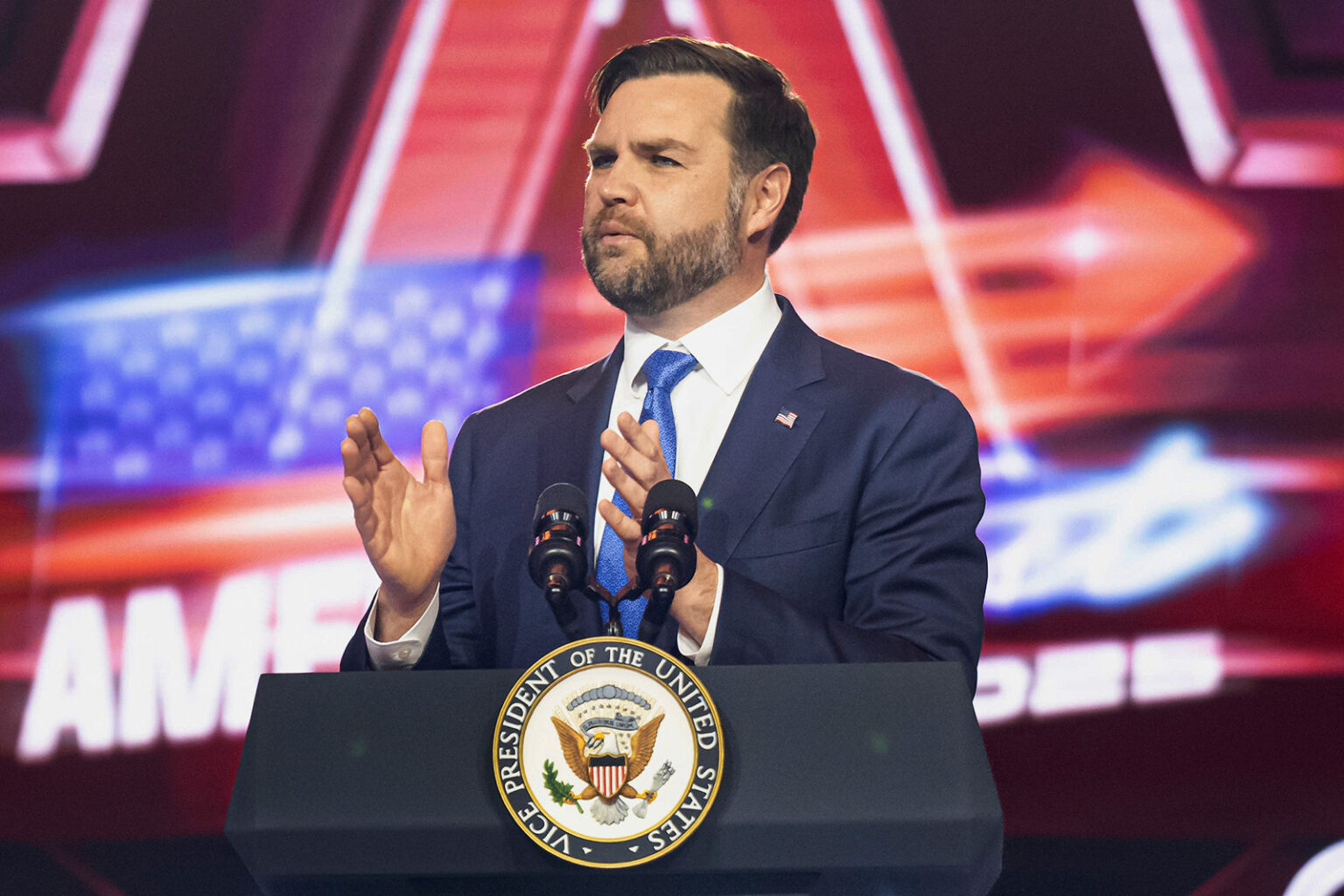
Vice President JD Vance has once again thrust religion into the center of America’s political conversation, declaring that the United States “has been, and by the grace of God, always will be, a Christian nation.” The statement has sparked a nationwide debate about the role of faith in public life and the meaning of American identity in an increasingly diverse society.

Speaking to supporters, Vance argued that Christianity is more than a historical influence on the United States—it is a foundational force that has shaped the nation’s values, institutions, and culture. He pointed to principles such as human dignity, individual liberty, moral responsibility, and community as ideals deeply rooted in the country’s Christian heritage.
For many conservatives, Vance’s remarks reflect a long-overdue acknowledgment of America’s historical foundations. Supporters argue that the country’s legal traditions, civic institutions, and moral framework were heavily influenced by Judeo-Christian teachings. In their view, recognizing this heritage is not an attempt to exclude others but rather an honest assessment of the nation’s history.

“America did not emerge in a cultural vacuum,” one supporter noted. “Its founding principles were shaped by religious ideas that continue to influence public life today.”
However, critics contend that Vance’s language risks blurring the line between cultural history and national identity. Civil liberties advocates, constitutional scholars, and leaders from minority faith communities argue that describing the United States as a Christian nation may unintentionally marginalize millions of Americans who are Jewish, Muslim, Hindu, Buddhist, atheist, or members of other religious traditions.
They point out that the U.S. Constitution establishes no official religion and that the First Amendment protects both freedom of religion and freedom from government-established religion. For these critics, America’s defining strength lies not in adherence to a single faith tradition but in its commitment to religious liberty and equal citizenship for all.
The controversy comes at a time when the country’s religious landscape is rapidly changing. While Christianity remains the largest faith in the United States, the number of Americans who identify with no religion has grown significantly over the past several decades. At the same time, non-Christian faith communities have become increasingly visible and influential within American society.
As a result, debates about religion and national identity have become more politically charged. Supporters of a stronger public role for Christianity often argue that the nation risks losing its moral foundations. Opponents counter that emphasizing one religious tradition over others can undermine the pluralistic ideals that have long defined American democracy.
At its core, the dispute surrounding Vance’s comments reflects a broader question that has shaped the nation for generations: Can America maintain strong religious roots while ensuring that citizens of every faith—and those with no faith at all—feel equally included in the national story?
The answer remains deeply contested. For some, America’s Christian heritage is inseparable from its identity. For others, the country’s defining characteristic is its ability to unite people from vastly different backgrounds under a shared commitment to freedom and constitutional principles.
As political leaders continue to debate the place of religion in public life, one thing is clear: discussions about faith, culture, and national identity are likely to remain at the forefront of American politics for years to come. Whether viewed as a defense of tradition or a challenge to pluralism, JD Vance’s remarks have reignited a conversation that extends far beyond religion itself—and into the very question of what it means to be American in the 21st century.