When Tragedy Is Not “Fate”: Hollywood, Grief, and the Cost of Softening the Truth
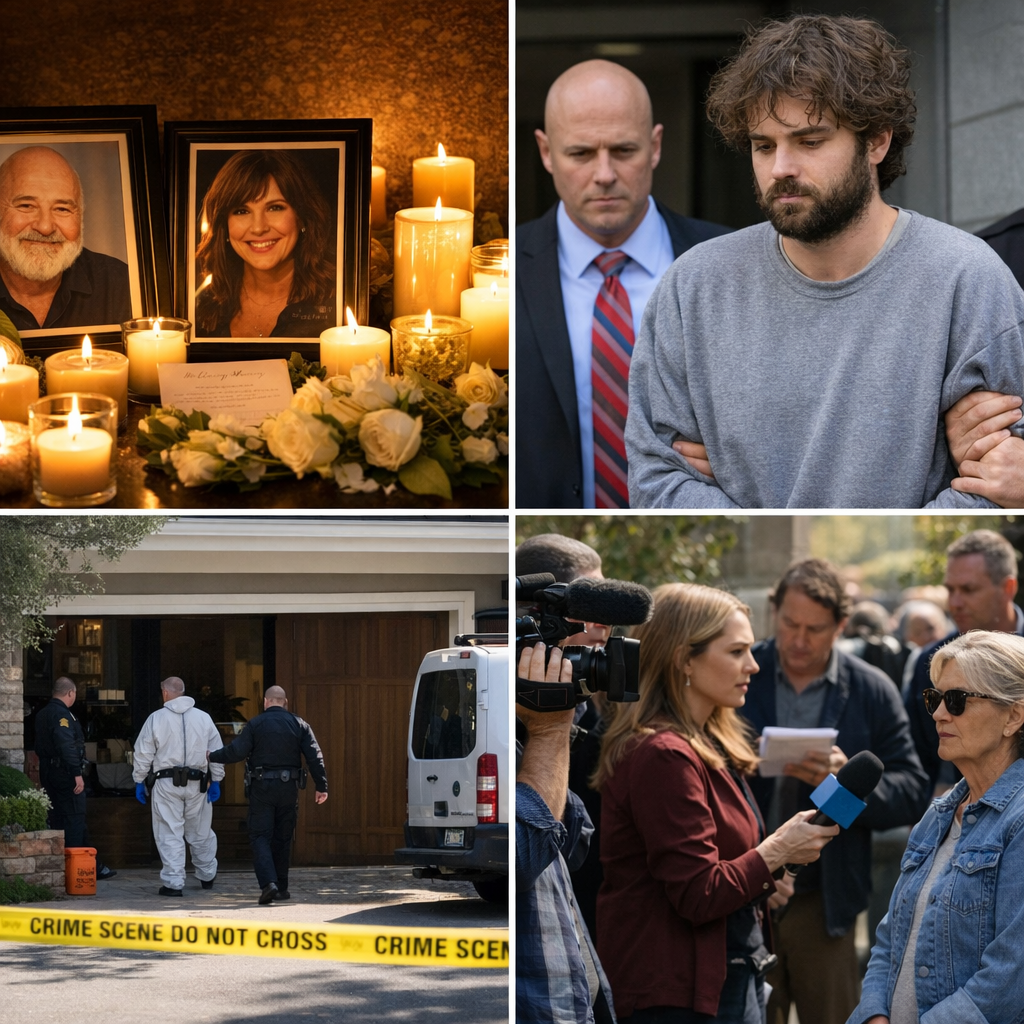
In the days following the deaths of Rob Reiner and Michele Singer Reiner, Hollywood has done what it often does best in moments of collective shock: it has mourned loudly, spoken carefully, and avoided the most uncomfortable questions.
Flowers were laid. Tributes were posted. Careers were remembered.
But beneath the surface of remembrance lies a deeper unease — one that many readers and observers have begun to articulate: this was not an unavoidable tragedy, and calling it one risks erasing the people who suffered most.
The circumstances of the Reiners’ deaths are now clear. This was not an accident. It was not fate. It was a homicide, and the person accused is their own son, Nick Reiner, a man whose long struggle with addiction and mental illness was well known within the family.
That truth has made the story nearly unbearable — and perhaps that is why so many have tried to soften it.

The danger of euphemisms
In the wake of family tragedies involving public figures, there is an instinct — often well-intentioned — to reframe violence as sorrow, accountability as misfortune, and suffering as narrative.
The language becomes gentler:
A troubled son.
A family under immense strain.
A heartbreaking outcome no one wanted.
What gets lost in that framing is agency, and with it, clarity.
Rob and Michele Reiner were not abstract symbols in a morality play about addiction. They were parents who spent years trying to save their child. They opened their home. They funded treatment. They stood by him when many would have walked away. And in the end, they were not safe in the very place meant to protect them.
To describe this solely as a “family tragedy” is to blur the line between compassion and avoidance.

Why the public reaction matters
The widespread circulation of a purported speech attributed to Barbra Streisand — fiery, grief-stricken, and sharply critical of media euphemisms — reveals something important, even if the words themselves were never officially spoken.
People recognized the sentiment immediately because it expressed what many were already feeling.
There is a growing frustration with how celebrity tragedies are romanticized, flattened into digestible arcs of pain and resilience. The public is not rejecting conversations about mental health or addiction. On the contrary, those discussions are essential.
What readers are rejecting is the implication — subtle but persistent — that understanding a perpetrator’s struggle requires diminishing the suffering of the victims.
Empathy, they argue, should not come at the expense of truth.

The parents at the center of the story
Lost in much of the coverage is a sustained reckoning with who Rob and Michele Reiner were in their final years.
Not merely famous.
Not merely wealthy.
Not merely “Hollywood parents.”
They were two people who refused to give up on their child, even as the cost of doing so grew heavier. Their lives became defined less by red carpets and accolades than by hospital visits, late-night phone calls, and the quiet hope that love might still be enough.
That devotion deserves to be named — not as naïveté, not as tragic irony, but as a form of courage.
To remember them only as casualties of circumstance is to deny the fullness of their humanity.

What this moment asks of the media
The question facing Hollywood — and the journalists who cover it — is not whether compassion should exist. It must.
The question is where compassion is directed, and what it obscures.
It is possible to acknowledge mental illness without excusing violence.
It is possible to grieve a broken family without neutralizing accountability.
It is possible to honor complexity without dissolving moral clarity.
Too often, the instinct to protect reputations — or to avoid appearing judgmental — results in stories that feel emotionally considerate but ethically hollow.
Readers are noticing. And they are asking for better.
A legacy beyond the tragedy
Rob and Michele Reiner should not be remembered primarily for the manner of their deaths. But neither should that truth be blurred into something safer, something easier.
Their legacy, at its core, is one of love carried to its limits — and of a society still struggling to speak honestly about where empathy ends and responsibility begins.
If there is anything this tragedy demands, it is not silence, nor sentimentality, but the courage to call things by their proper names.
Only then can remembrance mean something more than consolation.


